2 hours ago
Latest Updates
Featured Posts
Get in Touch
Location:
123 Innovation Street
Tech District, CA 94105
123 Innovation Street
Tech District, CA 94105
Email:
[email protected]
[email protected]
Phone:
+1 (234) 567-890
+1 (234) 567-890
The Corporate Battle Over CNN Highlights How Dysfunctional US Media Has Become.
On Thursday evening, as rumors swirled concerning a shooting at Brown University, the network's Kaitlan Collins used social media, highlighting the uncertainty and directing people to her network’s 9pm newscast.
While CNN is certainly not a impeccable news source, her message resonated to many. It is one of the outlets where one can locate grounded and generally reliable reporting – particularly during fast-moving events such as the one developing in the vicinity of a New Hampshire storage facility.
An Uncertain Position During a Business Battle
But CNN, now 45 years old, finds itself in a precarious situation as two huge media empires vie for ownership of its parent company, Warner Bros Discovery.
Whatever the outcome, the fate of CNN has turned into a major game of business acquisition, not as a question of what helps the news-consuming public.
“This represents another instance of the profound systemic issues with origins in many years of regulatory actions,” noted Victor Pickard, writer of “Democracy Without Journalism?” and a media policy professor at the Penn.
The debate about the future owner of Warner Bros Discovery – could it be Netflix or Paramount Skydance? – misses a more important point.
“It gets presented as a corporate drama with key players as the protagonists, but there is very little discussion of the public interest,” Pickard explained.
The Additional Factor: The Former President
The CNN scenario is made more complex by Donald Trump’s longstanding stance about a network he has frequently denounced as perhaps his primary “fake news” foe.
Think back to the cries of “CNN sucks!” at the president’s rallies, his administration’s punitive withdrawal of reporter Jim Acosta’s press credentials, or his sparring with Collins in press briefings.
Trump now asserts that CNN needs new ownership. This can be interpreted as ownership that will shield him from journalistic oversight. That is one reason why he seems to support Paramount Skydance, which has made a hostile bid.
There is a basis to like that company more. For one thing, it is run by David Ellison, son of the Trump-friendly Larry Ellison, one of the world’s richest people.
The company, parent of CBS News, also recently placed the right-leaning Bari Weiss, known for her “anti-woke” beliefs, as the top editor of that storied news network.
A Future of More Instability
Notably, if Netflix wins, CNN and other cable outlets would first be separated into a independent unit. That would be a relief to many at the network, but it’s hardly a secure position. That setup could set up CNN for a future sale. It never ends.
In the view of Timothy Wu, much of this is against the law, anyway. The well-known analyst of big tech’s dominance recently argued that competition laws should prohibit both deals.
“Either merger would be detrimental to the country, and both should be challenged by anti-trust authorities,” Wu stated.
The Core Problem and a Path Forward
Whatever happens with this particular battle, the bigger problem endures.
“The present media landscape is a highly structure that undermines democracy, but we must resist learned helplessness,” Pickard noted. Policy decisions – originating in the 1930s and 1940s – helped to foster this hyper-commercialized monster, and different policy decisions can tackle it.
Can reform occur in an era where the top communications regulator refuses to acknowledge that the agency is independent? Overhaul is highly improbable now, but that is not to say it will never happen.
Measures that strengthen independent news organizations, aid local journalism, fund public media, and prevent the concentration of media power in very few hands are not only possible – they are essential for a functioning democracy.
Regarding media ownership, bigger isn’t better. And news organizations such as CNN cannot be pieces in the latest acquisition battle.
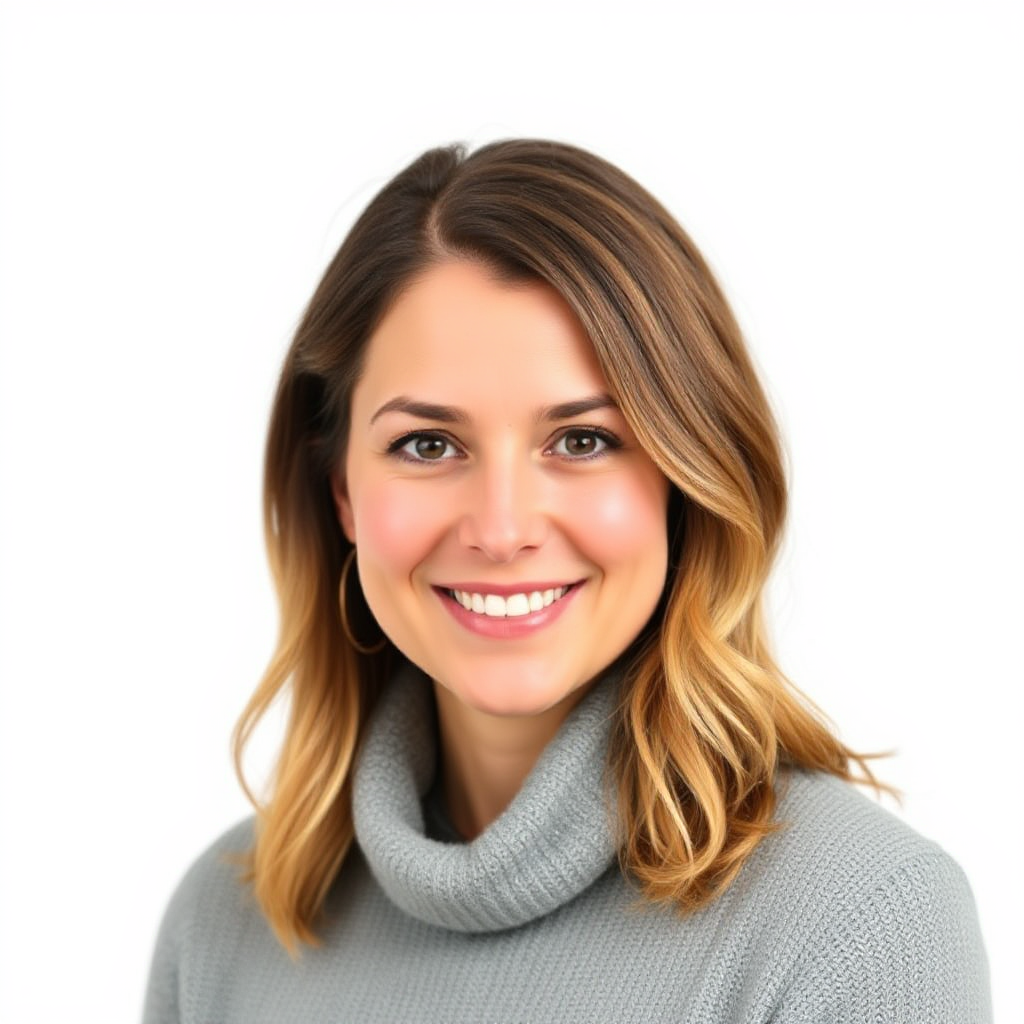
Stephanie Williams
Data scientist with over a decade of experience in analytics and visualization, passionate about making complex data accessible.
Sponsored News
News
'We’re like a family here': Sunderland's midfielder celebrates good times at the Black Cats.
Stephanie Williams
03 Oct 2026

News
Paris Saint-Germain Defeats Olympique de Marseille via Spot-Kicks to Lift Trophee des Champions Super Cup in the Middle East.
Stephanie Williams
02 Oct 2026
News
The artist gives twenty-five thousand pounds Mercury Prize to independent music venues
Stephanie Williams
02 Oct 2026
News
Why 'Showgirl' Transformed into the Glittering Look of This Year
Stephanie Williams
02 Oct 2026
News
Heartbreaking Update on Cargo Plane Incident: Fatalities Increases to 13
Stephanie Williams
02 Oct 2026